In a country built on rebellion, the silence is startling.
Donald Trump’s second term has ushered in a wave of executive actions, loyalty tests, and rhetoric that many scholars and commentators have described as authoritarian. From pardoning January 6 rioters to openly challenging judicial independence, the signs are there. Yet the public response—especially from those outside his base—has been muted.
Why?
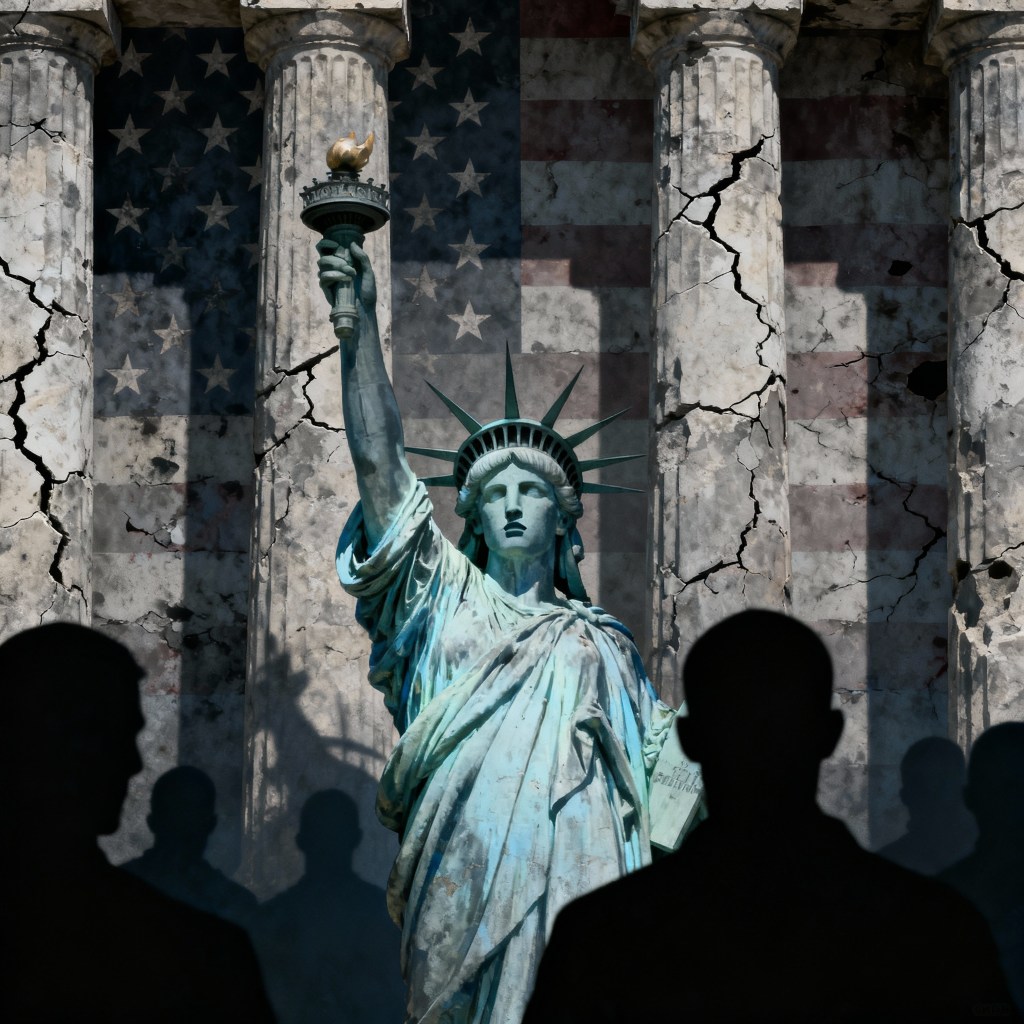
🤐 The Psychology of Silence
America’s democratic identity has long been treated as self-evident. Generations have grown up believing that institutions will self-correct, that checks and balances will prevail. But what happens when those institutions are bent—not broken, but quietly reshaped?
Many Americans are experiencing what psychologists call learned helplessness: the belief that speaking out won’t change anything. After years of political polarization, misinformation, and institutional gridlock, fatigue has set in. Silence becomes a coping mechanism.
Others are simply overwhelmed. Between economic uncertainty, climate anxiety, and cultural fragmentation, authoritarianism doesn’t always feel like the most urgent threat. It’s abstract, slow-moving, and wrapped in patriotic language.
🧠 Wandering Mind Wonders…
What if democracy isn’t lost in a single moment, but eroded through quiet compliance? What if the real danger isn’t dictatorship—but the normalization of it?
📺 Media, Memory, and the Myth of Stability
Mainstream media still struggles to balance coverage with caution. Words like “dictatorship” are avoided, even when actions mirror those of authoritarian regimes. The fear of alienating audiences or appearing partisan leads to euphemisms: “strongman tactics,” “unorthodox leadership,” “executive overreach.”
Meanwhile, many Americans lack historical memory of authoritarian rule. There’s no living legacy of dictatorship to trigger alarm bells. The absence of trauma breeds complacency.
🧩 The Role of Institutions
Congress, the judiciary, and federal agencies were once seen as bulwarks against tyranny. But when these institutions are politicized or undermined, public trust erodes. Americans begin to question not just their leaders—but the very system itself.
And when trust fades, so does engagement.
🔮 The Cost of Quiet
Silence isn’t passive—it’s powerful. It signals acceptance, even when unintended. It allows erosion to continue unchecked.
The question isn’t whether Trump is consolidating power. The question is: Why are so many watching quietly as he does?
#Donaldtrump #America #USA #WanderingMind #AmericanSilence #AuthoritarianDrift #SpeakUpOrFadeOut #PoliticalReflection #TrumpEra
 Wandering Mind
Leave a comment