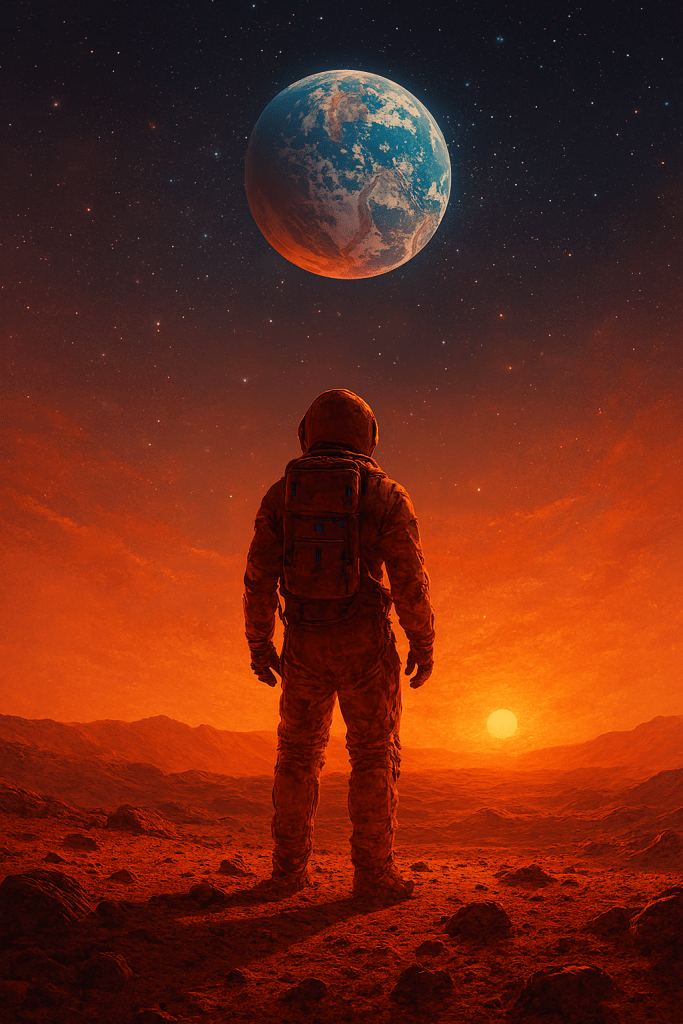
“There is a silence between stars that waits for us. The Moon was our first whisper, a fragile step into the infinite. But beyond that silver desert lies a red world, watching us with patient eyes. Mars has always been there—rusted, cold, and ancient—yet somehow alive in our imagination. The question is not if we will go, but when.”
🔭 The Pause After Apollo
After Apollo 17 in 1972, humanity turned inward. Wars, oil crises, and earthly struggles pulled us back. Technology was costly, fragile, and limited. Rockets consumed billions, computers filled entire rooms, and every launch was a gamble. We chose survival over exploration.
⚙️ The Technology Arc
But time bends progress.
- Miniaturization made machines smaller, faster, cheaper.
- Reusable rockets turned impossible economics into sustainable business.
- AI, robotics, and private players reignited the fire, proving that space is no longer just a government’s playground.
🌍 Why Mars, Why Now
- Survival: Earth is fragile. Colonizing Mars or other worlds is a backup plan for civilization.
- Science: Mars holds clues about life, geology, and planetary evolution. Other moons like Europa or Titan may hide oceans beneath their icy shells.
- Legacy: Just as Apollo inspired generations, Mars will be the next giant leap—proof that humanity refuses confinement.
🕰️ When Will It Happen?
NASA’s Artemis program is preparing for Moon bases in the 2030s. SpaceX and other private ventures aim for Mars landings in the 2030s–2040s. It may take decades to build sustainable colonies, but the trajectory is clear: the silence of Mars will break within this century.
✨ The Philosophy of the Leap
“Landing on Mars will not be about escape. It will be about expansion—the widening of the human story. When we plant our footprints on red dust, we will realize that the journey was never about leaving Earth, but about carrying Earth with us. The soil, the sweat, the spirit—all transplanted into the cosmos.”
 Wandering Mind
Leave a comment