Current Context
Tensions between the United States and Iran have escalated sharply in early 2026, leading to what is now described as the 2026 United States–Iran crisis. The situation is centered around disputes over Iran’s nuclear program, regional influence, and U.S. military presence in the Middle East. The crisis has already seen significant military mobilization and diplomatic deadlock.
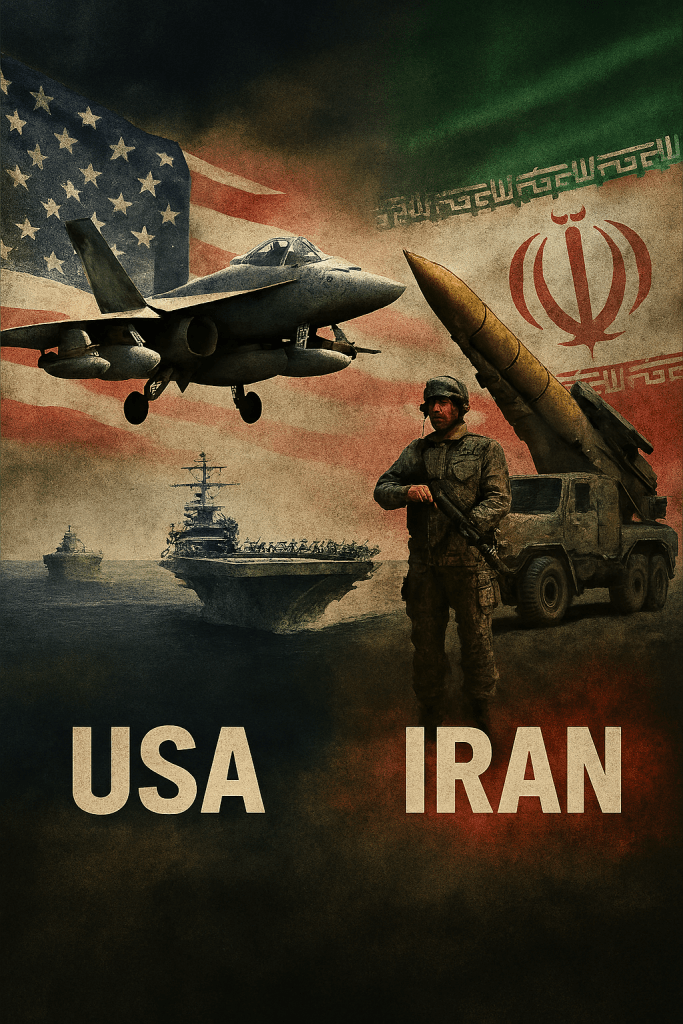
Military Build-Up
- United States:
- Deployed two carrier strike groups and additional warships to the Persian Gulf.
- Increased presence of Air Force and Army units under CENTCOM.
- President Donald Trump has referred to this as a “massive armada” positioned within striking range of Iran.
- Targets under consideration include nuclear facilities and missile infrastructure.
- Iran:
- Maintains strong defensive positions and has mobilized the Islamic Revolutionary Guard Corps (IRGC).
- Supported by regional allies such as Hezbollah and the Houthis, forming part of the “Axis of Resistance.”
- Insists negotiations should only cover its nuclear program, rejecting broader U.S. demands.
Diplomatic Stalemate
- Negotiations: Talks remain stalled, with Iran demanding focus solely on nuclear issues, while the U.S. pushes for broader concessions including missile programs and regional activities.
- Allies & Opposition:
- Israel and Iranian opposition groups back U.S. pressure.
- Russia and China have criticized U.S. military escalation, urging restraint.
Possible Scenarios
| Scenario | Description | Risks |
|---|---|---|
| Limited Strikes | U.S. targets Iran’s nuclear and missile facilities with air and naval power. | Could provoke retaliation against U.S. bases and allies in the region. |
| Full-Scale Conflict | Escalation into broader war involving regional militias and possibly Israel. | Severe disruption to global oil markets, humanitarian crisis. |
| Diplomatic Breakthrough | Renewed negotiations lead to temporary de-escalation. | Requires compromise on nuclear and missile issues, unlikely in current climate. |
Global Implications
- Energy Markets: Any strike risks disrupting oil exports from the Persian Gulf, spiking global prices.
- Regional Stability: Neighboring countries like Iraq, Saudi Arabia, and the UAE could be drawn into conflict.
- Domestic Politics: In the U.S., the crisis is shaping political debates ahead of the 2026 midterms.
Conclusion
The U.S.–Iran standoff is at a critical juncture. With military forces on high alert and diplomacy faltering, the possibility of strikes is real. However, the consequences—regional instability, global economic shock, and potential escalation into wider war—make this a decision of enormous weight. The coming weeks will determine whether the crisis tilts toward confrontation or compromise.
 Wandering Mind
Leave a comment