Strait of Hormuz Crisis Unfolds
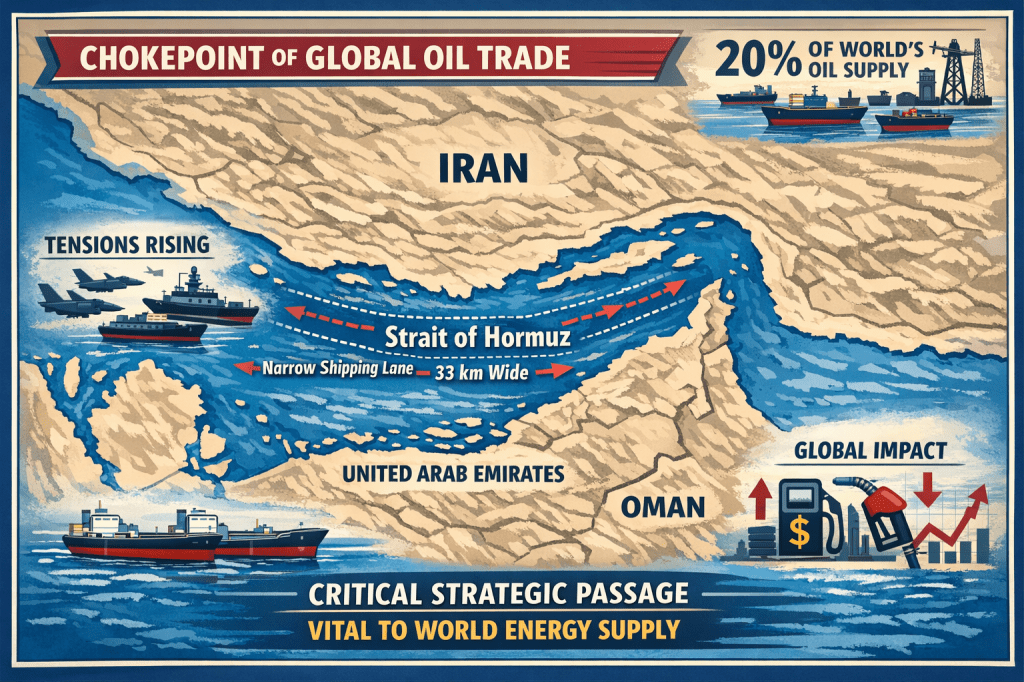
The Strait of Hormuz has become a flashpoint in the escalating 2026 US-Iran war, triggered by joint US-Israel strikes on February 28 that killed Iran’s Supreme Leader Ali Khamenei. Iran retaliated by effectively closing the strait, slashing shipping traffic by 95% and spiking global oil prices. This chokepoint handles 20% of world oil and key LNG flows, mostly to Asia, making any blockade a global economic threat.
Sudden Global Spotlight
It surged in importance due to Iran’s “selective blockade,” allowing only friendly vessels like Chinese and Russian ships while halting others amid US strikes on its oil assets like Kharg Island. Pre-war, the strait was tense but functional; post-strikes, Iran’s missile/drone threats and vetting system turned it into a weapon, disrupting Gulf exports from Saudi Arabia, UAE, and others. Oil prices topped $100/barrel, fueling inflation fears worldwide.
Trump’s Strategic Miscalculation?
Yes, evidence points to Trump underestimating Iran’s resolve despite generals’ warnings about Hormuz closure risks. The administration ignored “worst-case” scenarios during planning, assuming quick Iranian capitulation, but the blockade trapped Gulf oil and stalled US victory claims. Trump now pushes allies like Europe and Japan for a coalition to reopen it, admitting challenges without clear leverage.
Iran’s Grip on US Vulnerabilities
Iran holds a strong pulse via Hormuz control, using it as a bargaining chip for sanctions relief or concessions, defying threats as in past tensions. By prioritizing its oil exports to Asia via “dark” tracking ships and allies, Tehran sustains revenue while strangling adversaries’ energy flows. US strikes aim to damage this leverage, like on Kharg Island (90% of Iran’s crude), but reopening remains uncertain.
Israel Dragging USA In?
Israel co-led “Operation Epic Fury” strikes on Iranian nuclear/military sites, framing Iran as an existential threat after decades of hostility. Critics see Netanyahu leveraging US power for regime change aims, with broad Israeli support (93% of Jews per polls) but pulling America into endless escalation. Trump, despite “America First,” committed forces, echoing past overextensions.
Israel’s Actions Justified?
From Israel’s view, yes—targeting Iran’s nukes and missiles removes a “terror regime” threat, backed domestically as heroic self-defense. Globally mixed: allies condemn Iran but urge ceasefires; foes decry aggression. Outcomes uncertain, with no clear endgame beyond weakening Tehran.
Iran’s Quiet Backers Emerge
Iran found silent friends in Russia and China, providing military/political aid to down US drones and sustain the blockade, with selective strait access as gratitude. Vessels from India/Pakistan transited via diplomacy; others like Tajikistan sent aid. No overt war entry, but “Look East” bolsters Tehran against isolation.
Global Fatigue with US Role?
Allies like UK, France, Germany, Italy, Netherlands, Japan back Hormuz reopening but condition military aid on ceasefires, signaling caution and burden-sharing demands. Broader weariness shows in coalition struggles and critiques of US overreach, though most condemn Iran’s disruptions. Energy crises amplify calls for de-escalation over dominance.
#HormuzCrisis #StraitOfHormuz #IranUSWar #TrumpIranConflict #OilCrisis2026 #IsraelIranWar #GlobalEnergyShock
 Wandering Mind
Leave a comment