The Supreme Court of India’s recent approval of passive euthanasia for 32-year-old Harish Rana, who had been in a vegetative state for 13 years, is a landmark moment in the country’s legal and moral landscape. It is not just a verdict—it is a mirror reflecting the deepest questions of human existence, compassion, and justice.
⚖️ The Legal Turning Point
India’s journey with euthanasia has been long and fraught. In 2018, the Supreme Court recognized the right to die with dignity under Article 21 of the Constitution, permitting passive euthanasia under strict safeguards. Yet until Harish Rana’s case, this remained largely theoretical.
By allowing the withdrawal of life support, the Court has now translated principle into practice. This decision acknowledges that the law must evolve to meet the realities of human suffering. It is a precedent that will shape future cases, guiding families, doctors, and society through one of the most complex ethical terrains.
💔 The Human Story – Trauma and Emotions
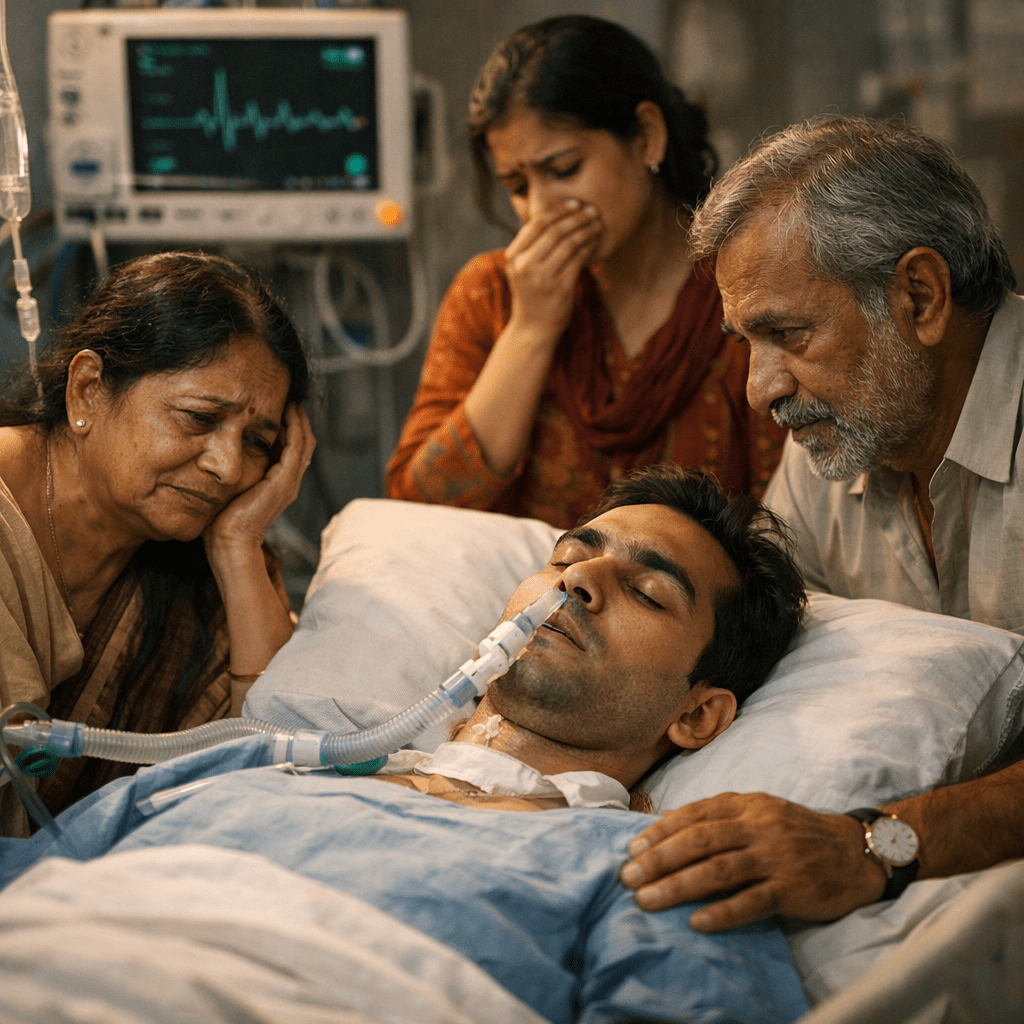
Behind the legal jargon lies a family’s 13-year ordeal. Harish’s parents and loved ones lived in a suspended reality—caught between faint hope and relentless despair. Every day was a reminder of what was lost, yet never fully gone.
- Emotional Exhaustion: Watching a loved one in a vegetative state is a trauma that erodes hope, dignity, and peace.
- Moral Conflict: Families often wrestle with guilt—are they abandoning their loved one, or are they finally granting them release?
- Societal Judgment: In a country where life is often seen as sacred, choosing to withdraw support can invite criticism, even stigma.
The Court’s decision, while painful, offers closure. It validates the family’s struggle and recognizes that sometimes, compassion means letting go.
🌐 Passive vs. Active Euthanasia
| Type | Definition | Legal Status in India |
|---|---|---|
| Passive Euthanasia | Withdrawal of life-sustaining treatment (ventilator, feeding tube). | Permitted under strict guidelines (applied in Harish Rana case). |
| Active Euthanasia | Direct act to end life (e.g., lethal injection). | Still illegal in India. |
This distinction is crucial. Passive euthanasia is framed as allowing nature to take its course, while active euthanasia is seen as human intervention. The Court’s cautious approach reflects India’s cultural and ethical sensitivities.
🌍 Broader Implications
- Medical Ethics: Doctors must balance their oath to preserve life with the responsibility to alleviate suffering.
- Legal Safeguards: Strict oversight is essential to prevent misuse, ensuring decisions are made with compassion, not convenience.
- Societal Debate: Religious traditions may resist euthanasia, while human rights advocates see it as a step toward autonomy and dignity.
This case will likely spark wider conversations about healthcare resources, end-of-life care, and whether prolonging biological existence always equates to preserving life.
✍️ Closing Reflection
Harish Rana’s story is not just about law—it is about humanity. It forces us to ask: Is life defined by its duration, or by the dignity with which it is lived and ended?
The Supreme Court’s verdict is a reminder that justice is not only about statutes—it is about compassion. In acknowledging the right to die with dignity, the Court has given voice to the silent suffering of countless families. Sometimes, the most humane act is not to prolong life, but to allow peace.


 Wandering Mind
Leave a comment