In an era where headlines travel faster than facts, statements from influential leaders like Donald Trump can feel seismic. When rhetoric escalates to language suggesting existential threats to ancient civilizations, it naturally raises a pressing question:
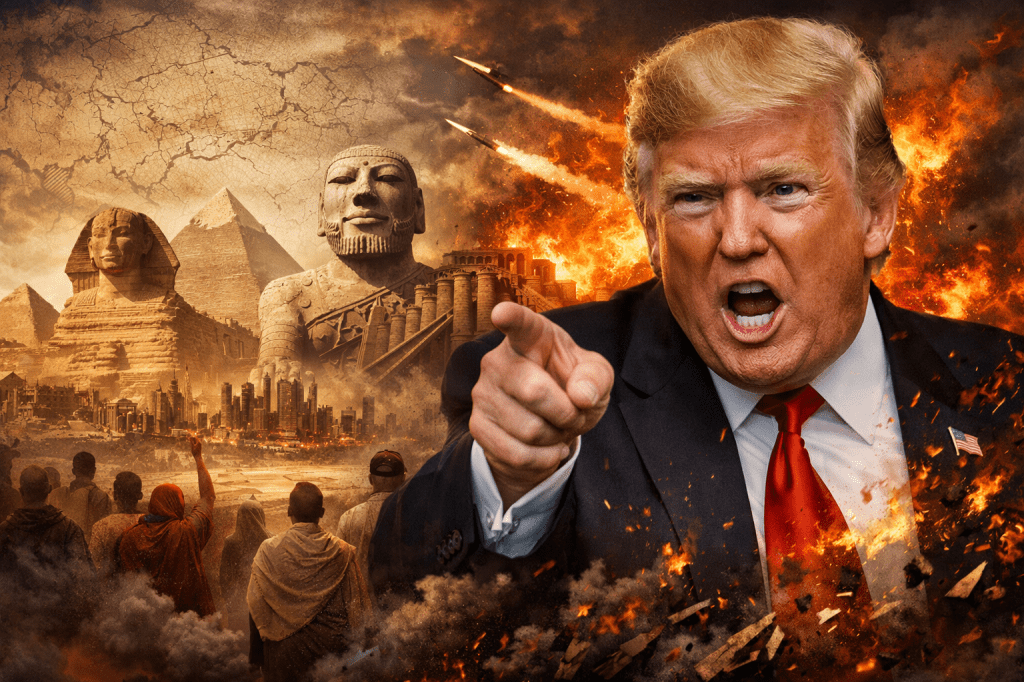
Is this a real threat—or political theatre?
Understanding the Nature of the “Threat”
At face value, the idea that any modern leader could “erase” a 5,000-year-old civilization is deeply alarming. Civilizations such as those rooted in the Indus Valley Civilization or Mesopotamian Civilization are not just political entities—they are living, evolving ecosystems of culture, identity, and history.
To “erase” them would require not just military dominance, but the dismantling of language, traditions, belief systems, and collective memory across millions—if not billions—of people.
That simply isn’t how the modern world works.
Rhetoric vs Capability
There are two key lenses to evaluate such a claim:
1. Political Rhetoric
Statements framed in extreme terms are often designed to:
- Signal strength to a domestic audience
- Frame geopolitical rivals as existential threats
- Shift media narratives
Historically, leaders across the world have used exaggerated language during elections or geopolitical standoffs. In most cases, these statements do not translate into literal action.
2. Actual Capability
Even the most powerful nations today—including the United States—face significant constraints:
- Global interdependence (trade, supply chains, alliances)
- Nuclear deterrence balance
- International law and institutions like the United Nations
- Economic consequences that impact their own citizens
Any aggressive move against a major civilization-state would trigger global instability, making such actions highly self-destructive.
What Is Realistic?
While total “erasure” is unrealistic, there are forms of pressure that are real and worth paying attention to:
- Economic sanctions that weaken nations over time
- Cultural influence and soft power that reshape identities gradually
- Information warfare and media narratives
- Geopolitical isolation or alliances that shift power balances
These are slow, complex processes—not apocalyptic events.
The Psychology of Fear Narratives
Dramatic phrases like “end of civilization” tap into deep fears. They:
- Simplify complex geopolitics into emotional binaries
- Create urgency and polarization
- Drive engagement in media ecosystems
But they often overstate reality.
The Bottom Line: How Real Is the Threat?
Short answer: Extremely low—at least in literal terms.
- No single leader can erase a 5,000-year-old civilization
- Global systems act as strong checks and balances
- Civilizations today are decentralized and deeply rooted
However, the indirect risks—rising tensions, polarization, and erosion of diplomatic norms—are very real and should not be dismissed.
Final Thought
Civilizations don’t collapse because of one speech or one leader. They weaken when dialogue breaks down, when fear replaces understanding, and when rhetoric overrides reason.
So while the headline may sound apocalyptic, reality is far more nuanced.
The real danger isn’t sudden destruction—it’s the slow drift toward division in a world that is more interconnected than ever before.
 Wandering Mind
Leave a comment