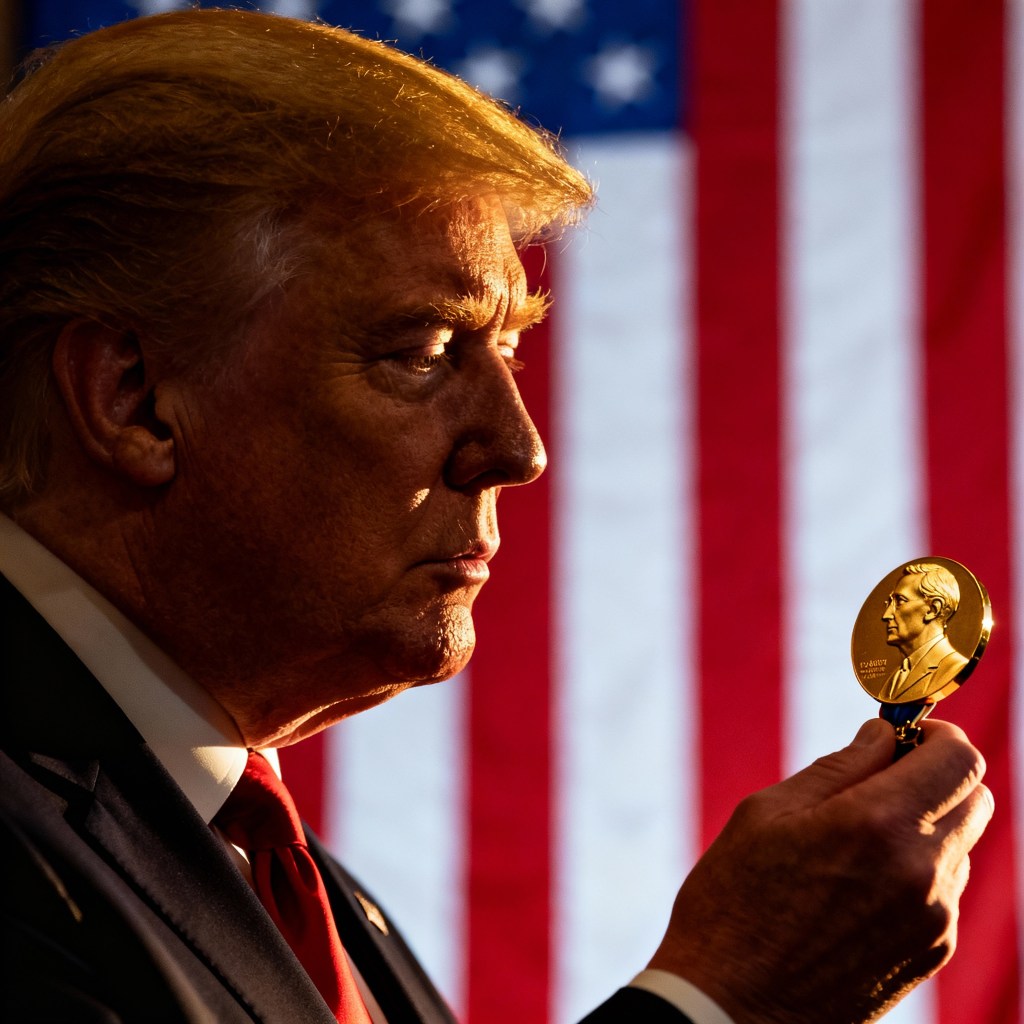
In a world where power often bends rules, the Nobel Peace Prize remains one of the few honors that cannot be bullied, bought, or brokered. And that’s precisely why it haunted Donald Trump.
This year, the Nobel Committee awarded the Peace Prize to María Corina Machado, a Venezuelan opposition leader fighting for democracy. Trump, despite his vocal campaign and claims of resolving “eight wars in nine months,” was passed over. His Abraham Accords, which normalized relations between Israel and several Arab states, were acknowledged—but not enough to earn the golden medal.
🧠 Wandering Mind Wonders… Why the Obsession?
For Trump, the Nobel wasn’t just a prize—it was a symbol. A final stamp of greatness. A way to outshine Barack Obama, who won the Peace Prize in 2009. In Trump’s narrative, the Nobel was the missing scene in his self-scripted epic: the misunderstood genius finally vindicated.
But the Nobel Committee doesn’t play by political scripts. It honors fraternity among nations, not transactional diplomacy. And that’s where Trump’s approach—loud, unilateral, often divisive—clashed with the ethos of the prize.
🇺🇸 What Next for Americans and Their President?
The snub is more than personal. It’s symbolic. It reflects a global discomfort with America’s shifting role—less cooperative, more confrontational. For Americans, it’s a moment to ask:
- Are we leading with diplomacy or dominance?
- Do our global actions reflect peace-building or power plays?
- And what kind of legacy do we want our leaders to leave?
🔍 The Echo Beyond Oslo
Trump may not have won the Nobel, but he’s won something else: attention. His rejection has sparked debates about merit, influence, and the meaning of peace. And for a nation grappling with identity, it’s a reminder that true greatness isn’t awarded—it’s earned.
📣 Follow more reflections on Food in Kitchen #WanderingMind #NobelPeacePrize #TrumpSnub #LegacyAndLeadership #AmericaReflects #BlogOfPolitics #FoodInKitchen
 Wandering Mind
Leave a comment