“When a currency whispers, it’s economics. When it screams, it’s geopolitics.”
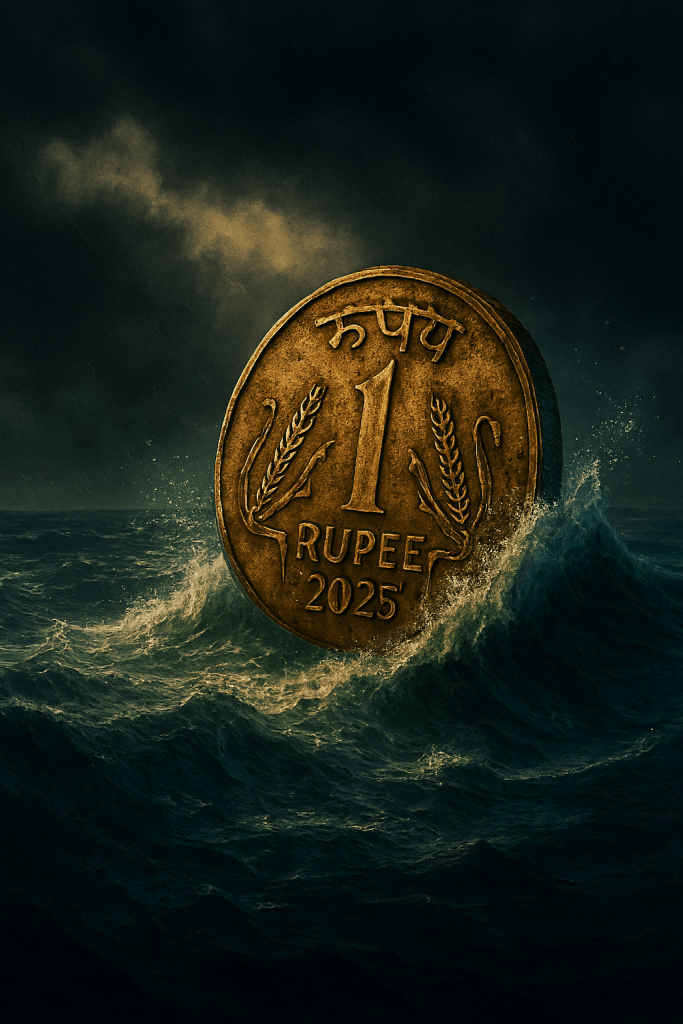
On December 11, the Indian Rupee hit a record low of ₹90.47 against the US dollar. This wasn’t a sudden stumble—it was a slow unraveling. A convergence of US trade tariffs, foreign investment flight, and corporate dollar hoarding pushed the rupee into unfamiliar territory.
But beneath the surface, this is more than just a financial headline.
🌍 The Global Pulse Behind the Fall
- US–India trade deal delays have created uncertainty, weakening investor confidence.
- Foreign Institutional Investors (FIIs) are pulling out, sensing volatility and better yields elsewhere.
- Indian corporates are aggressively buying dollars, hedging against future instability.
- The US dollar itself is flexing, buoyed by policy shifts and global demand.
🔍 What This Means for India
- Importers bleed: Higher costs for oil, tech, and raw materials.
- Exporters cheer: Short-term gains from a cheaper rupee.
- Middle-class squeeze: Travel, education abroad, and luxury goods just got pricier.
- RBI’s dilemma: Intervene and burn reserves, or let the market play out?
🌀 Wandering Thoughts
This isn’t just a currency story—it’s a mirror. A reflection of how India’s global positioning, policy agility, and economic resilience are being tested. The rupee’s fall is a whisper from the future: adapt, diversify, and prepare.
What if this is not the bottom, but the beginning of a new baseline? What if the rupee’s weakness is a symptom of a larger shift—from global interdependence to strategic decoupling?
 Wandering Mind
Leave a comment