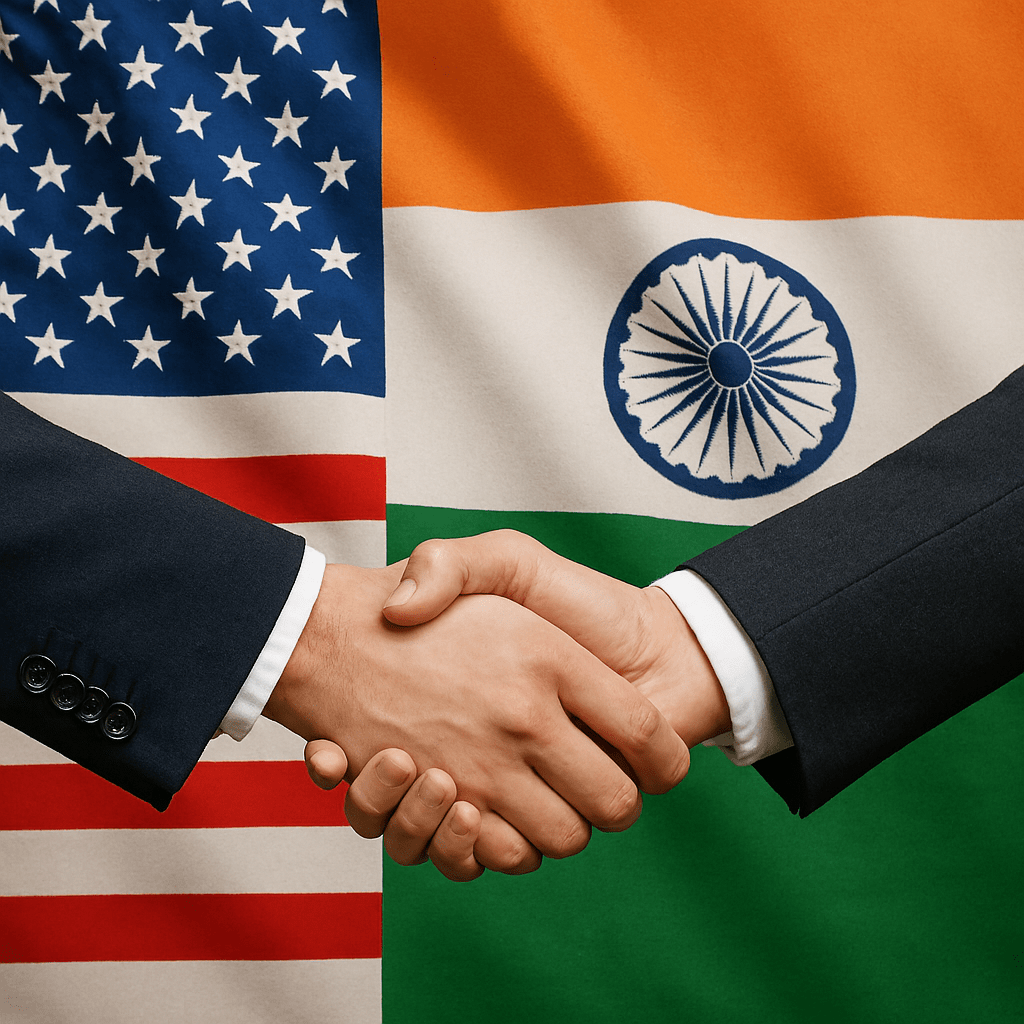
On February 2, 2026, the United States and India unveiled a landmark trade agreement poised to redefine their economic partnership. Announced by U.S. President Donald Trump following a phone call with Indian Prime Minister Narendra Modi, the deal introduces significant tariff reductions and strategic commitments, signaling a new era in bilateral relations.
Key Highlights of the Trade Agreement
1. Tariff Reductions
Effective immediately, the United States will reduce its reciprocal tariff on Indian goods from 25% to 18%. This move aims to alleviate previous trade tensions and foster increased commerce between the two nations.
2. India’s Commitments
In response, India has pledged to eliminate its tariffs and non-tariff barriers on U.S. products over time. Additionally, Prime Minister Modi committed to a “Buy American” initiative, involving over $500 billion in future purchases of U.S. energy, technology, agriculture, coal, and other products.
3. Energy Import Shift
As part of the agreement, India will cease purchasing Russian oil and instead increase imports from the United States and potentially Venezuela. This strategic shift aligns with broader geopolitical objectives and aims to reduce dependency on Russian energy sources.
Context and Implications
This trade agreement follows a period of heightened tensions, during which the U.S. had imposed a 50% tariff on Indian goods, citing India’s continued oil purchases from Russia. The new deal not only reduces these tariffs but also signifies a strengthening of U.S.-India relations. By committing to substantial purchases of American goods and altering its energy import strategy, India is positioning itself as a key ally in the region.
The agreement is anticipated to have far-reaching effects on global trade dynamics, potentially influencing other nations’ trade policies and alliances. For India, the deal could lead to increased access to American markets and technology, bolstering its economic growth and development.
Reactions and Future Outlook
While President Trump has publicly announced the deal, official confirmation from the Indian government is awaited. Commerce Secretary Rajesh Agrawal indicated that the bilateral trade deal is nearing completion, with most contentious issues resolved.
The successful implementation of this agreement could pave the way for a more comprehensive Free Trade Agreement (FTA) between the two nations in the future. Such a development would further solidify economic ties and promote mutual growth.
Conclusion
The 2026 India-U.S. trade deal marks a significant milestone in the economic relations between the two countries. By addressing previous trade disputes and setting the stage for increased cooperation, the
 Wandering Mind
Leave a comment